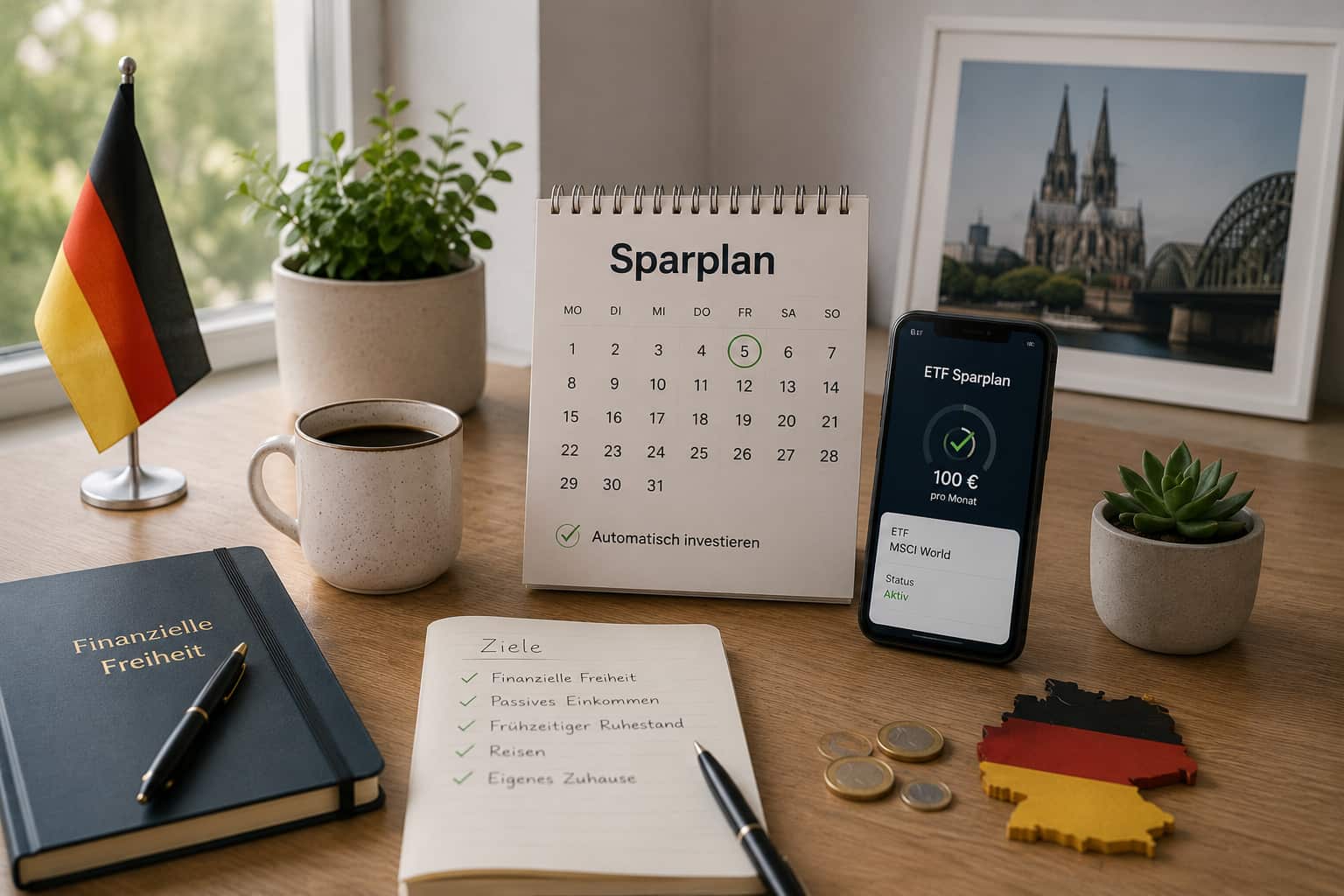

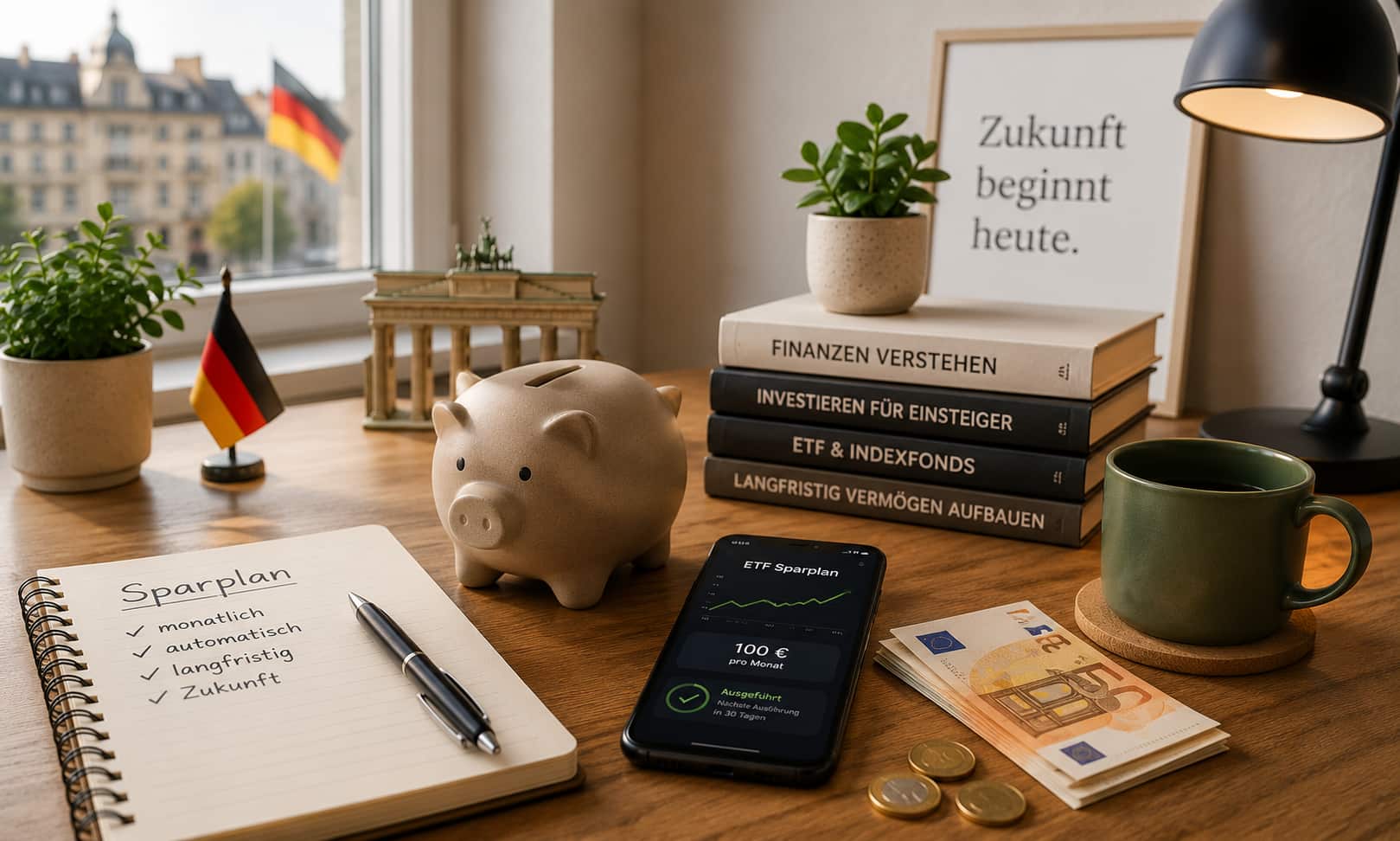
If you are learning about investing in Germany, you have probably already come across the word Sparplan.
For many people in Germany, a Sparplan becomes their first step into the world of investing. Almost every major broker and bank offers this option, and many investors use it to build wealth over the long term.
But what exactly is a Sparplan?
Simply put, a Sparplan allows you to automatically invest a chosen amount of money at regular intervals. For example, every month your broker can buy an ETF worth €50, €100, €200, or any other amount you choose.
This makes investing easier because you do not need to manually place an order every time.
Table of Contents
- What Is a Sparplan?
- How Does a Sparplan Work?
- Why Is Sparplan So Popular in Germany?
- ETF Sparplan
- How Much Money Do You Need to Start?
- Advantages of a Sparplan
- Disadvantages of a Sparplan
- Who Is a Sparplan Suitable For?
- FAQ
What Is a Sparplan?
The word Sparplan can be translated as a “savings plan” or “regular investment plan.”
The concept is very simple.
An investor chooses:
- an investment product;
- an investment amount;
- a purchase date;
- an investment frequency.
After that, the broker automatically executes purchases according to the selected settings.
For example, every month on the 5th, the broker may automatically invest €100 into a chosen ETF.
As a result, investors do not need to remember every purchase or manually log into the platform.
How Does a Sparplan Work?
Imagine that you decide to invest €100 per month into an ETF that tracks the MSCI World Index.
After setting up a Sparplan, your broker automatically withdraws the money from your account and purchases the selected ETF.
The purchases happen regardless of whether markets are rising or falling.
In some months prices will be higher, while in others they will be lower. Over time, this creates an average purchase price.
This approach helps investors avoid constantly wondering when the “best time” to invest might be.
Why Is Sparplan So Popular in Germany?
One of the main reasons Sparplan is so popular is its simplicity.
Most people do not want to make investment decisions every month or constantly monitor financial markets.
It is much easier to set up a system once and allow it to run automatically.
In addition, Sparplan works very well with long-term investing. Many people use it to build retirement savings, create wealth for their children, or work toward other financial goals.
This is why ETF Sparplans have become one of the most common investment tools among private investors in Germany.
ETF Sparplan
Today, when people talk about a Sparplan, they most often mean an ETF Sparplan.
In this case, the investor regularly purchases an ETF using a fixed amount of money.
Examples include:
- MSCI World ETFs;
- FTSE All-World ETFs;
- S&P 500 ETFs;
- other diversified ETF funds.
For many beginner investors, combining ETFs with a Sparplan provides a simple way to start investing without having to select individual stocks.
Learn more in our article:
What Is an ETF?
How Much Money Do You Need to Start?
Many beginners believe that investing requires a large amount of money.
In reality, that is not the case.
Many brokers allow investors to start an ETF Sparplan with as little as €25 per month. Some platforms even allow investments starting from €1.
This makes investing accessible to almost everyone.
The most important factor is not the size of the first investment, but consistency.
Advantages of a Sparplan
The popularity of Sparplan can be explained by several important advantages.
First, investors do not need to constantly think about buying investments.
Second, Sparplan helps create discipline. Investments happen automatically regardless of emotions or market news.
In addition, a Sparplan allows investors to gradually build wealth even with relatively small monthly contributions.
For many people, automation is the biggest advantage of this approach.
Disadvantages of a Sparplan
Despite its popularity, a Sparplan is not necessarily the perfect solution for every investor.
The main drawback is that purchases happen automatically regardless of market conditions.
Some investors prefer choosing their own entry points.
In addition, Sparplan conditions can vary between brokers. Before opening a plan, it is useful to review fees and available investment products.
Learn more in our article:
Best Brokers in Germany
Who Is a Sparplan Suitable For?
A Sparplan is often chosen by people who:
- want to invest for the long term;
- prefer a simple investment strategy;
- do not want to monitor markets regularly;
- want to gradually build wealth;
- are comfortable investing a fixed amount every month.
For many beginner investors, a Sparplan is one of the easiest ways to start investing.
Key Takeaways
A Sparplan is a system of regular automatic investments.
The investor chooses the amount, investment product, and frequency, while the broker executes the purchases automatically.
Because of its simplicity and convenience, Sparplan has become one of the most popular long-term investing methods in Germany.
For many people, investing begins with an ETF Sparplan and regular monthly contributions.
FAQ
What is a Sparplan in simple terms?
A Sparplan is an automatic investment plan offered by a broker or bank.
How much money do I need for a Sparplan?
Many brokers allow investors to start with as little as €1 per month.
What is an ETF Sparplan?
It is a Sparplan that regularly purchases ETF funds.
Can I change the amount of my Sparplan?
Yes. Most brokers allow investors to adjust or stop their Sparplan at any time.
Is Sparplan suitable for beginners?
Yes. This is one of the main reasons why many new investors start with a Sparplan.
What to Learn Next
Want to Learn More About Investing in Germany?
In the Finditerra Telegram channel, we regularly publish simple explanations of investing topics, educational content for beginners, and ideas for long-term wealth building.- Easy-to-understand investing insights
- Resources for beginner investors
- ETF and index fund explanations
- Long-term investing ideas
- Practical guidance for investors in Germany